Baidu MuseSteamer in-depth analysis: a new milestone in domestic AI video generation

MuseSteamer, a multimodal generation model launched by Baidu's commercial R&D team, has achieved the world's first place in VBench's graphic video evaluation, and has made important breakthroughs in the simultaneous generation of Chinese audio and video, refined description system and style control, and has demonstrated superior semantic comprehension capabilities. Despite the lack of lens scheduling ability and slow generation speed, MuseSteamer is still an important milestone in the development of domestic AI video technology, and the Turbo version has been opened for free to experience.
Cursor MCP Servers Configuration Guide and Cursor Practical MCP Recommendations
MCP (Model Context Protocol) is a protocol that allows large models to interact with external tools and services. Cursor IDE supports AI assistants to invoke tools to perform searches, browse the web, and code operations through the MCP Servers feature. MCP servers can be added through the Settings interface and configured at both the global and project levels.MCP is written in multiple languages and allows the AI to run tools automatically or manually and return results, including images. Recommended resources include Awesome-MCP-ZH, AIbase, and several MCP client tools. Commonly used MCP services such as Sequential Thinking, Brave Search, Magic MCP, etc. enhance AI's ability to think, search, front-end development efficiency, and other features, respectively.
Gemini 2.0 PDF Explained: Code Examples and Best Practices
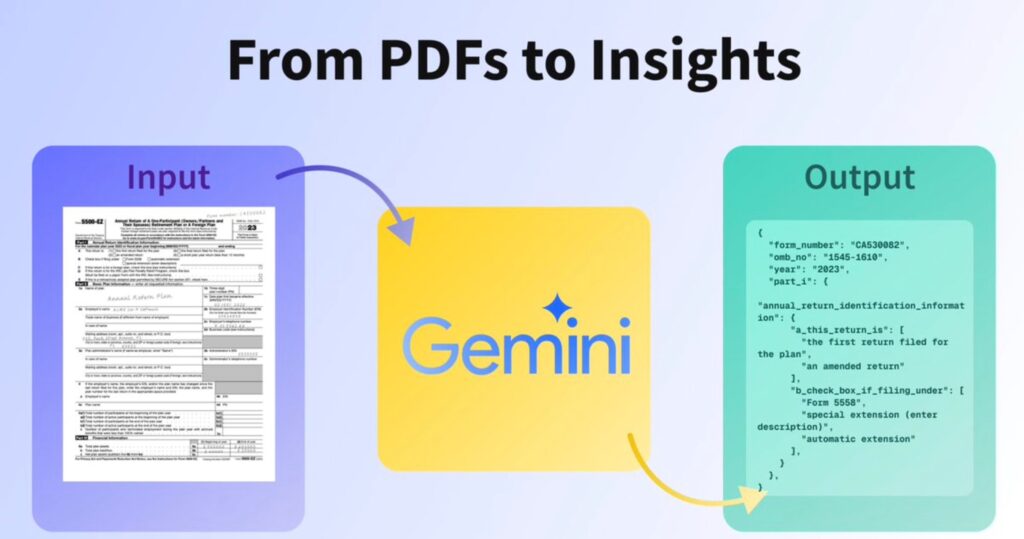
The Gemini 2.0 model, introduced by Google DeepMind, significantly improves PDF document processing capabilities. Compared to traditional solutions in terms of accuracy, cost and scalability deficiencies, Gemini 2.0 significantly optimizes the PDF parsing process through structured data extraction, semantic chunking and efficient batch processing, and provides a variety of model options to balance performance and cost.
A deeper understanding of LangGraph: a new paradigm for building intelligent AI workflows
LangGraph is a revolutionary AI framework for processing complex tasks through graph structures that support multi-step reasoning, dynamic decision-making, and multi-intelligence collaboration. Its core includes node, edge and state management, suitable for building intelligent workflows. Compared with traditional chaining frameworks, LangGraph is equipped with conditional routing, loop control and visualization features, and has a wide range of applications in intelligent customer service, text processing and other fields.
A deeper understanding of LangGraph: a new paradigm for building intelligent AI workflows
LangGraph is a revolutionary AI framework for processing complex tasks through graph structures that support multi-step reasoning, dynamic decision-making, and multi-intelligence collaboration. Its core includes node, edge and state management, suitable for building intelligent workflows. Compared with traditional chaining frameworks, LangGraph is equipped with conditional routing, loop control and visualization features, and has a wide range of applications in intelligent customer service, text processing and other fields.